

Knowing from the previous two essays on the same topic that you can observe, witness, and become aware of your thoughts conveys and confirms that you are beyond thoughts. They exist within the extent of your awareness, appearing as and when you feel connected with the world around you. Since you are apart from thoughts, you are the observer and watcher of your thoughts, experiencing and realising what life in dualities is all about.
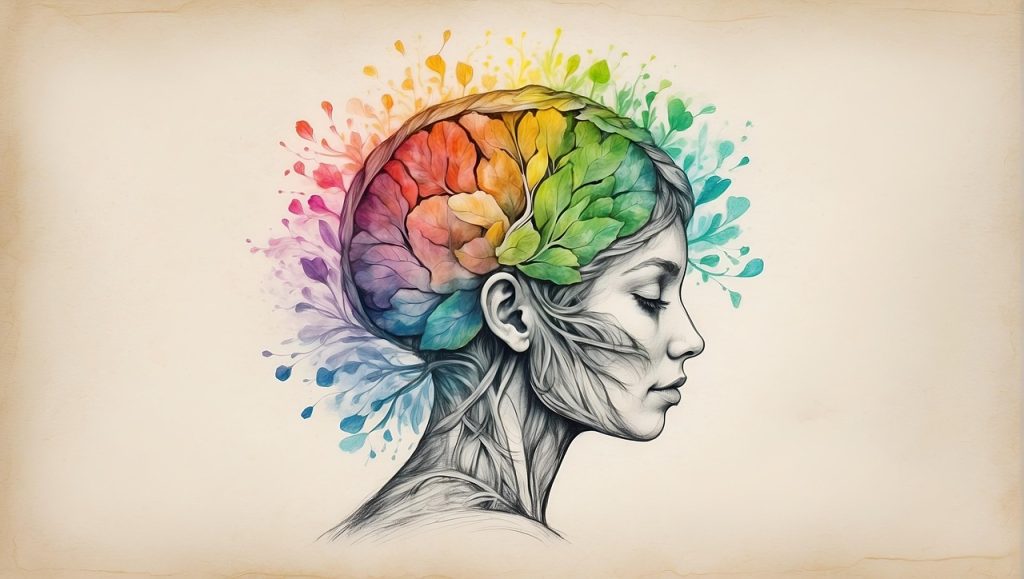
Thoughts occur in three different stages: first, when you are alert, observe your mind at any moment. Your observation is thoughtless, choiceless, and instinctively spontaneous. Second, if you are centred and focused on that observation, pure, conscious thoughts emerge in duality, allowing you to choose whether to accept or ignore. The third stage occurs when you become aware of your past awareness or consciousness, which subtly guides your subconscious mind through memories of its thought processes, allowing you to experience and realise the outcome of those thoughts.
We should remember that every form of potential energy requires a force to express its kinetic field. Awareness is the supreme energy force behind our thoughts, and consciousness is its kinetic field. Awareness provides the ability to perceive, manifesting in the mind before thoughts. It can be in a state of spontaneity, enabling the mind to witness its inner self or focus on outer sensations through sensory perceptions. It synthesises information through a complex network of neural pathways, passing information via neurons, making the mind conscious of its cognitive abilities and preferences.
It means that senses perceive, but aware energy configures the information our senses gather. Aware energy is present in all perceptions, inner and outer, but the intensity of this energy makes us different from one another. Every individual’s mind determines its course of action purely based on the intensity of its awareness. After that, if the mind is attentive, it is responsible for making the mind conscious of its perceptions. Since science is ignorant about the origin of thoughts, the philosophical exposition imparted in this article is from Spiritualism.
Spiritualism is the subject, whereas spirituality, through its methods and practices, aims to cultivate the inner spirit (aware energy) to initiate self-awareness, thereby acquiring higher consciousness and transcending and evolving inwardly and outwardly to become spiritual. Improving your inner awareness has been well formulated in Yoga, which incorporates methods for coordinating all three – mind, body, and soul as one composite unit.
Conscious or not, the mind is the most phenomenal instrument in which thoughts flow like a river. On either bank of this river, you have duality in opposites; in the centre is awareness, your presence, managing the flow of water so that it does not overflow. Once out from their source, thoughts scatter, one thought being freshly replaced by another, constantly changing, randomly repeating, overlapping, and stimulating, becoming the fundamental cause of your mind’s restlessness unless checked by the individual intensity of aware energy. It flows in auto-mode from its subconscious level without requiring direct consciousness. The mind without self-awareness is limited to its physically wanting self; it remains in subconscious awareness, attaching primarily to outer identification from its likes and dislikes.
Due to their impermanent nature, thoughts never remain constant. They keep dancing between emotions and desires emanating from memory for the future. They exist more in an apparent state, creating illusions rather than authentically revealing their existential moment. This happens because thoughts tend to react out of emotions compulsively rather than respond proactively to any moment.
Immediate reality exists as it is now, limited to space and time. It can be a conscious perceptual reality, which differs from one moment to another, or an observable fact that is the same to all. Also, through consciousness, we create. Furthermore, our reality emerges from the thoughts we entertain, focus on, and choose to believe. Additionally, we have the ultimate reality, as Vedic philosophy declares – all that exists in this Universe is one unitary, non-dual, unchanging reality in unity and continuity, called Brahman (spirit) or absolute energy. Similarly, the ultimate God, reality, truth, and love exist in the absoluteness of everything; however, despite being the same, they vary in every individual, depending on their level of awareness.
The ego is an imaginary state of mind comprising nothing but ‘I-thoughts’ that bestow a definition of ownership on the individual. This ego is the core of the mind’s cognitive thoughts, rigid and conditioned by memory, creating a false identity that appears to be stable but is not. It attaches to all that it holds dear. The subject of Spiritualism awakens you to understand the actual, innate, fundamental, and essential nature of your reality. A spiritual person recognises this apparent ego simply by becoming alert, aware, attentive, and conscious, constantly observing one’s mind. It does not need to analyse through thoughts; it merely knows and becomes conscious.
Knowingness and alertness through observation become the essence rather than ‘thinking-ness.’ Pure conscious awareness through knowing is primal to thoughts but vanishes the moment desire and the memory of ‘I Am’ come to the fore, resulting in various impressions of ‘me and mine.’ When thoughts arise, they only revolve around ‘I, me, and mine.’
Absolute pure energy separates into extremes of dual opposites, eventually synthesising all that exists in formless waves of absolute energy. The union of any separate form of energy occurs when the thesis unites with its antithesis, not two. However, it is also essential to remember that seeking absoluteness is not a destination or an escape; both opposite paths (Absolute and living in relative realities) are for us to understand and experience while being alert, attentive, and aware so that we can witness them constantly through our soul.
In material existence, the mind is not self-aware; it functions mechanically in an automatic mode and is therefore termed subconscious. Due to living in the duality of opposites, physical existence submerges into sub or lower conscious relativity; in reality, all is but a ‘Lila’ (play) of that Absolute oneness to experience the life of dualities. The mind remains ignorant of all egoistic thoughts and their respective actions unless you experience self-awareness. Neither this nor that of any dual factor, whether it is day or night, happiness or sadness, positive or negative, are all parts of the same absolute energy, which remains constant and indivisible, only separated by the mind into its two extremes.
Therefore, the mind primarily comprises thoughts in duality, emerging from the indivisible, non-dual energy of absolute awareness. When thoughts flow, the mind gets activated. When the mind goes to sleep, thoughts recede, and so does your consciousness, but awareness always remains awake. That is why, if we sleep over a problem that is determined, there is a high chance we will have a solution the next day, simply because awareness is always awake. While asleep, the mind quietly returns to its realm of total awareness. With spiritual knowledge and its experiencing, the moment you get up, the mind is instantly aware of both the inner and the outer. The levels of the material and the spiritual, the personal thinking self, and the impersonal presence of individual aware energy overseeing both selves.
You do not need to think to become aware. Our authentic nature is always present in that state of awareness and consciousness. It originates spontaneously in choiceless ideas before they are separated into duality by memory and intellect. The dual-operating cognitive mind subconsciously chooses either this or that from emotional desires.
Meditation is the reverse of thoughts; it sustains in a still mind. Conversely, thoughts depend on memory support and require time before transferring and receiving data to and from the intellect. Therefore, thoughts revolve around past information about any subject, projecting it to better our future and achieve our desired goals. Meditative awareness in the stillness of the mind is dynamic; it compels the mind to focus on the present moment. The energy it consumes converges directly into the present rather than leaking into the past or future. In this manner, the mind can focus its energy on the now. Memory and intellect are necessary for material pursuits, but intelligence and mindfulness are essential for spiritual growth.
In a meditative state, the mind becomes a prayer characterised by intention, observation, and a sense of spontaneity. Thought, by nature, is meant more for the sake of experiencing material existence to identify, choose, and attach. It prompts the mind to analyse, select, and discriminate in one’s self-interest. Therefore, in material life, desirous thoughts are the essence of your physical existence, and they are responsible for making the mind egoistic, restless, and forever demanding more and more for your selfish needs. When you balance the material and the spiritual, you shall also relish success and peace of mind.
Three commonly followed meditation processes help you stabilise the randomness of subconscious thoughts. The first is Transcendental Meditation, which is more for therapy and relaxation. The second involves chanting with concentration to focus your mind and enhance your awareness of any subject. It calms the monkey’s mind and quiets its chatter. The third is meditative awareness, where your mind is focused and alert, observing an object with watchfulness from one moment to the next. In this case, the mind’s ‘thinking-ness’ is replaced with a knowingness in spontaneous awareness.
The third method is mindfulness, which is total awareness. It insists on being existential from one moment to the next. Focusing your mind on the present moment reduces unwanted mental chatter, allowing you to concentrate and contemplate whatever you wish to achieve. Your thoughts of the past and future decline, and the mind focuses on the present.
Why do we require stillness of mind in spirituality? Stillness or mindfulness in no way means stopping the mind from thinking; it merely aims at reducing the unnecessary chattering that the mind is accustomed to. If the mind is awake, we are aware of choiceless thinking in the present moment. It is because there is usually an overload of unnecessary, selfish thoughts that wish to choose this or that, and as a result, we hop, skip, and jump from the past, forget the present, and go directly into the future.
Therefore, the moment you move your attention from the present, the mind goes from the absolute to a dual mode in relativity. It gets compromised, and thoughts go on a rollercoaster ride of this and that, beginning to chatter about what it likes and dislikes. It randomly jumps from the past into the future; the mind’s productivity decreases, depending more on the outer world, with borrowed knowledge from here and there, and unquestioningly believing this and that, thereby reducing self-creativity.
As mentioned, energy tends to go into randomness or entropy if not controlled. This sort of disorder, created by uncontrolled thoughts, is the reason for all the conflicts, chaos, contempt, and comparisons leading to anxiety and despair that we see all around.
Therefore, in most cases, the brain, when physically awake, refuses to be silent. It keeps chattering in subconscious thoughts, flashing between sensations and past awareness. Such meaningless thoughts that invade the mind deplete mental energy. They usually occur when your mind is unaware of a lower consciousness, creating disorder and discomfort. Instead of using the mind as an instrument, the mind uses you. You lose control, disconnect from the nature of your true self, and bend towards negativity. Such thoughts erode the mind’s presence in random behaviour. In such wasteful moments, you need to take control of your thoughts and become conscious of who and what you spiritually are.
Spirituality aspires to balance the material with the spiritual, allowing the mind to accept both poles with grace and respect under heightened awareness. It understands that the opposites are separate parts of a unitary absolute energy. The experiences of worldly and spiritual aspects are equally essential for fulfilment and completeness in life.
If selfless love for all as one is a spiritual attribute, desire becomes the most dynamic feature associated with material life. The mind is nothing but desire in thoughts; if there is desire, the energy of self-interest will not let the mind be silent. Hence, thoughts are vital for material existence; for a spiritual mind, they are excess baggage – both have a definite meaning in life. However, meditative awareness, combined with alert observation, enriches inner consciousness towards selflessness, which is essential for spiritual growth. This is crucial for altering the mind from its constant desires towards selfless love.
NAMASTE
Leave a Reply