

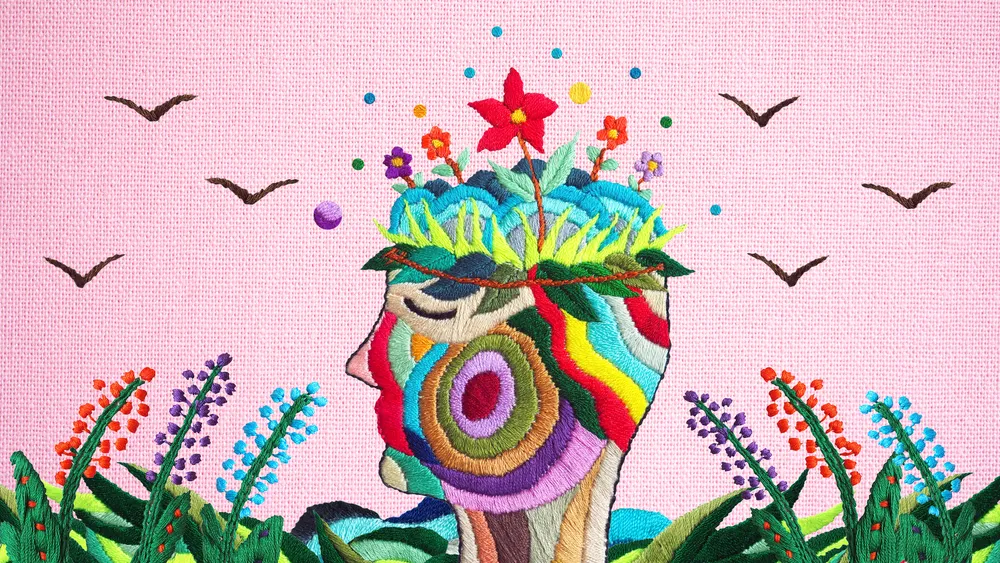
The question “Who is the Witness of the Mind?” has been answered differently by philosophy, psychology, and neuroscience, and there are many other versions of this question. It all depends on how you understand and believe. However, let me answer it as best as I can.
There are four elements as defined by spirituality within us: body, mind, soul, and spirit. The first three are individualized, whereas the spirit is universal, and in spirituality, it is considered universal aware energy.
The human mind is a transmitter and receiver of this universal aware energy, which varies in intensity from person to person and is signified by the suffix -ness, as in awareness. It is the supreme ability of universal quantum fields of waves and particles to make the human mind aware in non-duality, enabling it to witness its thoughts, feelings, and actions, thereby becoming conscious of all it perceives through its sensory organs.
In this manner, awareness is the ‘witness’ within the mind, and, in turn, the soul in pure consciousness becomes the individual ‘witnesser’. The nondual soul, even though it is on par with awareness, is a notch less than the spirit because it is individualized.
The soul is required to first become aware and, thereafter, conscious, meaning it is dependent on awareness. It further dilutes into duality, making the human mind conscious of this or that in duality and then entering the subconscious section of the mind, in lower consciousness, to experience material life.
Hence, the role of the universal aware energy, which we refer to as Para Brahman in Hinduism, is to make the human mind aware, and, in turn, the role of the soul is to make the mind conscious of experiencing its life of materiality.
Now, let us know the role of the nondual soul in detail.
The soul’s first role is to introspect the mind by witnessing its flow in different sections. In purity, it witnesses, with the aid of the spirit, the mind’s functions as they flow in their respective directions, thereby checking them. But for that, the cognitive mind needs to be still and silent to awaken the dormant soul settled within.
The soul is the witnesser who checks and guides the mind. Furthermore, it provides fresh, pristine nondual knowledge through intuitiveness, instinctiveness, and innovativeness, creating our unique individuality, distinct from the personality (false mask) the sensory mind creates, from which all inventions arise.
This occurs when the sensuous mind surrenders to the spirit and, for example, when a scientist, after having worked hard, is exasperated and suddenly exclaims, “Bingo – I’ve got it.” We term that “Eureka,” provided that the scientist discovers or develops something new rather than utilizing borrowed knowledge; it is the soul that comes to its rescue.
Leave a Reply